
How EU Tachograph Changes Are Reshaping Time-Critical Transport in 2026
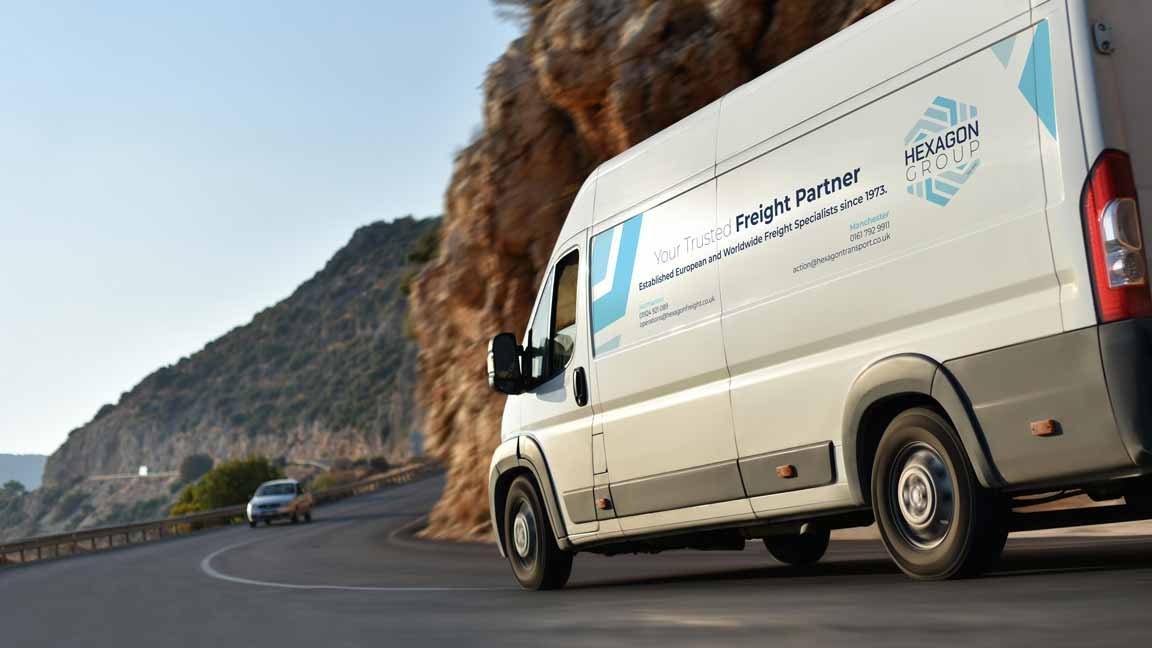
Hexagon small van
The landscape of European express transport and time-critical logistics is changing.
From July 2026, new EU regulations will extend tachograph requirements and drivers’ hours rules to certain light commercial vehicles (LCVs) used in international transport.
For businesses relying on same day delivery, express dedicated transport, and urgent European shipments, this change is more than just compliance — it’s a shift in how urgent freight moves across borders.
At Hexagon, we’re already seeing a clear trend: the industry is moving away from small panel vans for European express work and towards larger, more efficient 7.5 tonne dedicated vehicles with tail-lifts.
What are the new EU tachograph rules for vans in 2026?
From 1 July 2026, new EU legislation will apply to certain vans and light commercial vehicles used in international transport.
This affects vehicles that:
01.
Are between 2.5 and 3.5 tonnes gross vehicle weight
02.
Are used for international transport of goods within the EU
03.
Operate under hire or reward (commercial transport) or cabotage

Vehicle logistics
These vehicles will be required to use a second-generation smart tachograph (G2V2).
This means drivers must now comply with:
EU drivers’ hours regulations
Mandatory driving time limits
Required rest breaks and rest periods
Full digital recording of journeys and working time
In practice, this brings many van-based express operations into the same compliance framework as HGV transport.

Delivery
Why these tachograph changes matter for express transport
For years, the express logistics sector has relied heavily on:
✓⃝ Small panel vans
✓⃝ Flexible cross-border movements
✓⃝ Fast same day European dispatch
✓⃝ Minimal regulatory overhead
However, the introduction of tachograph rules for vans removes much of that flexibility.
This creates new challenges for:
Same day international delivery schedules
Urgent freight planning
Dedicated van availability across Europe
Driver working time restrictions on long-distance routes
As a result, many logistics operators are reassessing how they deliver time-critical freight across Western Europe.
The hidden impact: less flexibility for European van transport
While tachographs are designed to improve road safety and standardise compliance, the operational impact on express transport is significant.
For time-critical logistics, the key changes include:
Reduced ability to run long-distance EU trips in a single driving shift
More structured route planning due to enforced rest periods
Increased administrative tracking of driver activity
Greater need for compliance management systems
This affects the very core of express transport: speed, flexibility, and availability on demand.

Why the industry is shifting from vans to 7.5 tonne express vehicles
As regulations tighten, many European logistics providers are transitioning express work away from smaller vans and towards 7.5 tonne dedicated vehicles with tail-lifts.
This shift is happening for several reasons:
1. Already fully compliant with tachograph regulations
7.5t vehicles already operate under EU drivers’ hours and tachograph laws, meaning no regulatory change in 2026.
2. Better suited for express freight volumes
Dedicated 7.5t vehicles can carry larger, palletised, or industrial shipments that would previously require multiple vans.
3. Improved efficiency for long-distance European transport
Fewer vehicles, fewer handovers, and more efficient cross-border movement.
4. Tail-lift capability for faster loading and unloading
Ideal for urgent palletised freight and industrial logistics.
5. Greater operational reliability under new rules
Less disruption from regulatory change and driver availability constraints.
Express dedicated transport is evolving — not slowing down
Despite these regulatory changes, demand for express dedicated transport across Europe continues to grow.
Businesses still need:
Same day loading across Western Europe
Fast transit times for urgent shipments
Direct, dedicated vehicle movements
Reliable cross-border freight solutions
The difference is how that transport is delivered.
Instead of relying heavily on small vans operating at maximum flexibility, the market is moving toward structured, compliant dedicated fleets.
How Hexagon supports urgent European shipments
Hexagon provides express dedicated transport solutions across Western Europe, including:
Same day vehicle loading (where available)
Time-critical European freight movement
Dedicated vehicles (no consolidation or shared loads)
Coverage across major European routes
A mixed fleet from small panel vans through to 7.5 tonne tail-lift vehicles
This flexibility allows us to match the right vehicle to the urgency, weight, and compliance requirements of each shipment.
As EU regulations evolve, we are increasingly prioritising larger dedicated vehicles for international express work, ensuring reliability, compliance, and consistent transit performance.
What businesses should consider now
With the 2026 tachograph changes approaching, businesses relying on European express transport should begin reviewing:
How urgent shipments are currently moved across the EU
Whether van-based long-distance routes will remain viable
The impact of drivers’ hours restrictions on same day delivery
Alternative solutions using dedicated 7.5t express vehicles
Supply chain resilience for time-critical freight
Early planning will help avoid disruption once the new rules take effect.
The extension of tachograph regulations to vans marks a significant shift in European road transport.
While it improves compliance and standardisation across the industry, it also changes how urgent, time-critical freight is planned and delivered.
The future of express European logistics is not smaller — it’s smarter.
For many operators, that means moving toward dedicated, compliant 7.5 tonne transport solutions that maintain speed while meeting new regulatory demands.